
Lab Members
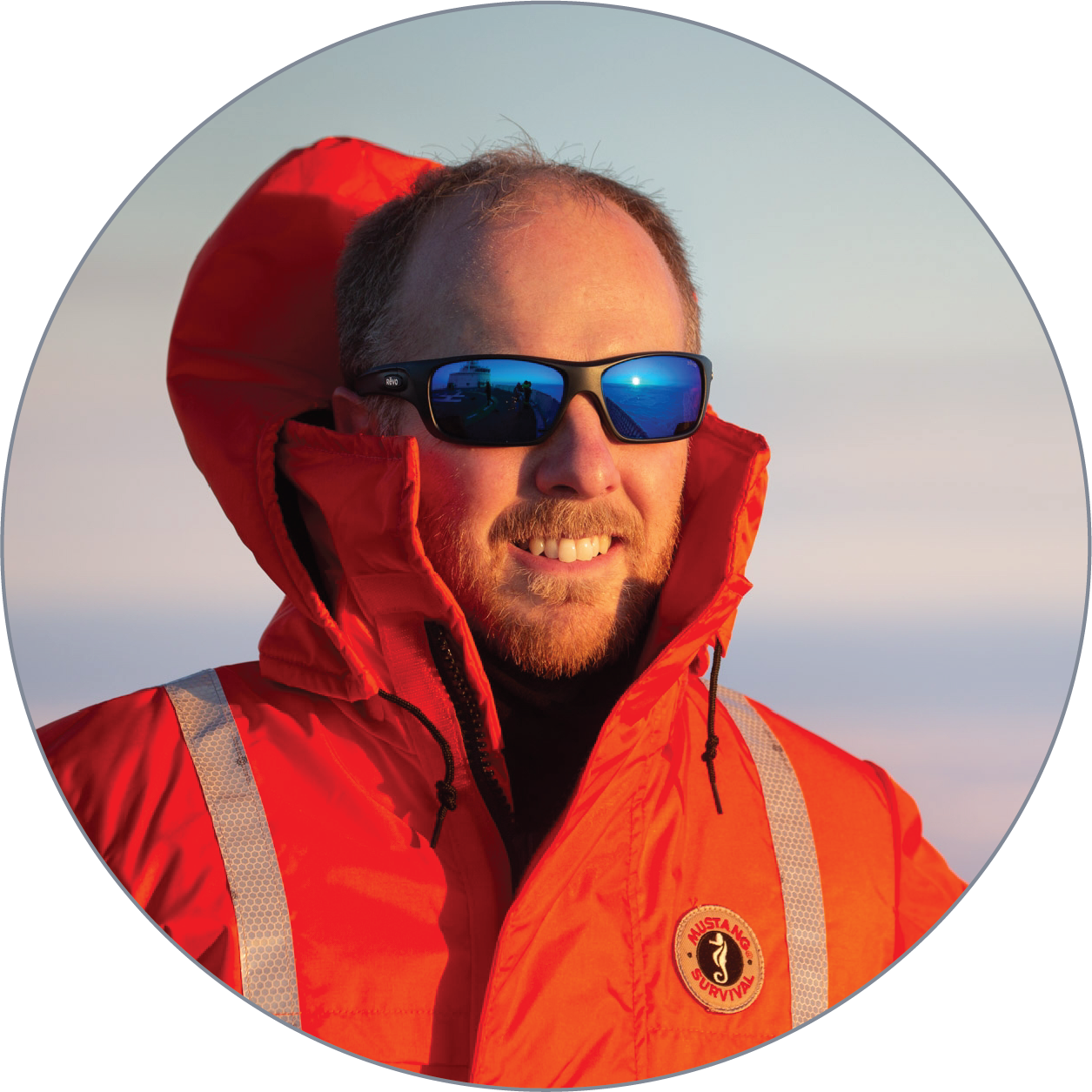
Dr. John Jamieson
Associate Professor; Canada Research Chair in Marine Geology (Tier II); Chair, Canadian Consortium for Ocean Drilling
I received my BSc (Hons) from the University of Alberta (2002), MSc from the University of Maryland (2005), and PhD from the University of Ottawa (2013). From 2013-2015 I worked as a research scientist at GEOMAR Helmholtz Centre for Ocean Research Kiel (Germany).

Dr. Chris Galley
Post-doctoral Fellow; PhD 2022
I received my B.Sc. from the University of Victoria in 2015, and Ph.D. from Memorial University of Newfoundland in 2022. I study ancient and modern hydrothermal systems to better understand the fundamental geologic controls on ore-forming processes, primarily through the modelling of geophysical data, where magnetic and/or gravity data to construct 3D physical property models of the Earth.
The development of the surface geometry inversion method with applications to modeling seafloor hydrothermal alteration and associated mineralization
As the exploration and exploitation of seafloor polymetallic deposits appears to be the next frontier in mineral exploration, developing and optimizing remote sensing methods to locate and study these deposits is becoming increasingly important for understanding the resource potential and environmental implications of mining from the deep seafloor. One such deposit type is seafloor massive sulfide (SMS) deposits, which form on and below the seafloor at sites of high-temperature hydrothermal fluid venting at a variety of tectonic settings where seafloor extension and magmatism takes place. SMS deposits have promise to offer new sources of Cu, Zn, Pb, Au, and Ag, but the remote environment in which they are located creates difficulties for their discovery and resource estimates. This thesis demonstrates the SGI method to be an excellent tool for modelling the contact surfaces between the sulfide mound, the hydrothermally altered chloritized basalt, and least altered basaltic host rock. The volumes within these surfaces can then be used to calculate an estimated tonnage for the ore located below the seafloor, developing a better resource model for SMS deposits.
Johannes Scheffler
PhD Candidate
I received my B.Sc. in Chemistry at Leipzig University, Germany, in 2017. As part of my M.Sc in Mineralogy and Materials Science at Leipzig I spent an exchange semester at the University of Bergen, Norway, where I had my first experience studying seafloor hydrothermal systems research. My Ph.D. research at MUN focuses on the development and application of different U-series radioisotope geochronological dating methods for submarine hydrothermal systems, starting with samples collected from the Escanaba Trough.
Sarah Daves
MSc Candidate
Bettina Bourque
MSc Candidate
Former Lab Members

Sarah Moriarty
MSc 2020, PhD 2026
I received a dual BSc in Geology and Marine Science/Oceanography from Kutztown University of Pennsylvania in 2017 and a MSc in Earth Sciences from Memorial University in 2020. My research focuses on the application of stable isotope signatures (including multiple S and Sr isotopes) of seafloor massive sulfide deposits, hydrothermal fluids, crustal rocks, and sediments to investigate fluid mixing and elemental cycling associated with submarine hydrothermal systems at mid-ocean ridges and arc volcanoes.
Tracing the evolution of modern seafloor hydrothermal systems and their associated endmember compositions over time
Submarine hydrothermal systems occur where seawater infiltrates permeable oceanic crust at locations proximal to volcanic activity. Fluid-rock interactions in submarine hydrothermal systems can vary considerably, resulting in different influences affecting the formation and composition of associated seafloor massive sulfide (SMS) deposits. This dissertation utilizes the stable isotopes of sulfur (S), in conjunction with other geochemical, oceanographic, geophysical, and geobiological methodologies to constrain fluid cycling processes affecting hydrothermal systems and their contributing endmembers. Sulfur isotopes are a useful tool for tracing fluid-rock interactions, reservoir mixing and fractionation processes affecting SMS deposit formation. New S isotope data from five hydrothermal fields spanning two mid-ocean ridge systems—Juan de Fuca Ridge and East Pacific Rise (EPR)—indicate a progressive microbial alteration of host rocks that correlates with hydrothermal system maturity, host rock age, and tectonic setting.Seafloor massive sulfide deposits from the Juan de Fuca Ridge: evidence from multiple sulfur isotopes for buried sediment and microbial activity
Submarine hydrothermal vent systems hosted at sedimented mid-ocean ridges are often associated with larger seafloor massive sulfide deposits than typical sediment-free mid-ocean ridge systems. The Juan de Fuca spreading ridge contains both sediment-hosted and sediment-free hydrothermal systems (Middle Valley and Axial Volcano, respectively). The ridge also contains the Endeavour vent field, which occurs at the outer extent of turbiditic sediments, where the seafloor is currently sediment-free and consists of basaltic lava flows, but evidence from hydrothermal vent fluid composition suggests the presence of buried sediment. Multiple sulfur isotope ratios of hydrothermal precipitates from these three sites were analyzed to isotopically fingerprint differences in hydrothermal sulfur cycling associated with sedimented and sediment-free substrates. A three-component mixing model in Δ³³S and δ³⁴S space was developed that represents the differing contributions of sulfur derived from seawater, magmatic sources, and both sediment and crustal sulfur sources that have been influenced by microbial activity.
Caroline Gini
PhD 2026
I obtained my Bachelor’s degree in geology from the Université de Lausanne (Switzerland) in 2015 and my Master’s degree in 2017 from the Institut de Physique du Globe de Paris (France). I am interested in understanding geological and tectonic processes at mid-ocean ridges and their implications for hydrothermal systems. My research focuses on understanding the geology of a hydrothermal vent field on the Mohns Ridge, in the Greenland Sea, and geological characterization of the seafloor and exploration of hydrothermal deposits using Interferometric Synthetic Aperture Sonar (InSAS), an ultra-high-resolution underwater acoustic mapping and imaging technology.
Seafloor geological mapping and interferometric synthetic aperture sonar: from mid-ocean ridges to continental shelves
The Oceans cover 70% of the Earth's surface, yet only 25% have been mapped at a resolution of at least ~100 m, a resolution that is coarser than the size of many important geological features on the seafloor, such as hydrothermal vents or volcanoes. On land, geological maps typically end at the shoreline due to the inaccessibility of the seafloor and challenges of working underwater (i.e., pressure, light attenuation). Seafloor surveys are carried out using acoustic techniques, such as sonars, to obtain bathymetric maps and acoustic imagery of the seafloor by measuring the travel time and intensity of an emitted acoustic signal reflected at the seafloor, respectively. Seafloor mapping, however, involves a trade-off between data resolution and coverage, with higher resolutions obtained at the cost of coverage area. This thesis presents an investigation of the application of different seafloor survey technologies and approaches for geological characterization of the seafloor.
Natalie McNeil
MSc Candidate
I graduated from Saint Mary’s University in Halifax, Nova Scotia, with a BSc (Hons) in geology. At Memorial University my research focuses on the application of the 230Th/234U dating technique to samples collected from seafloor hydrothermal vent fields, and evaluating the precision of this technique relative to other techniques that have been applied to vent fields previously (e.g., 226Ra/Ba).

Kallie Stone
MEnv Candidate
The goal of my research project is to investigate the release of metals into the ocean from the oxidation of seafloor massive sulfide deposits. For my undergraduate thesis project, I evaluated hydrothermal discharge velocities associated with active venting at the Niua South hydrothermal vent field (near Tonga) through video analysis, and used these data to calculate the chemical mass balance and depositional efficiency of this hydrothermal system.

Charles Lapointe
MSc 2026
Geological characterization of the Aurora hydrothermal vent field, Gakkel Ridge
The Aurora hydrothermal vent field is located on Gakkel Ridge, an ultraslow-spreading mid-ocean ridge in the Arctic Ocean, in a region of perennial sea-ice cover. Previous expeditions to Aurora revealed high-temperature black smoker chimneys on pillow basalts near an axial volcano summit, but challenges operating in drifting sea ice prevented detailed exploration and sampling of the site. The hydrothermal vents were imaged in detail for the first time during the 2021 HACON expedition, and rock sampling of three active vents and adjacent hydrothermal talus by remotely operated vehicle marked the first successful geological exploration of a hydrothermal field under ice. This study provides a geological characterization of Aurora using video footage and mineralogical and geochemical analyses of hydrothermal rock samples.Current position: Systems Analyst, Geological Survey of Newfoundland and Labrador (St. John's, NL, Canada)

Dr. Andrew Martin
Post-Doctoral Fellow 2019-2022
Current position: Assistant Professor, Department of Geoscience, University of Nevada Las Vegas (USA)

Dr. Dennis Sánchez Mora
PhD 2022
This dissertation focuses on fundamental geological processes that lead to the formation of these hydrothermal metal-rich deposits. To achieve this, the age, rate of accumulation, composition, and efficiency of metal deposition of the hydrothermal deposits was determined at the Lucky Strike vent field, which is located on the Mid-Atlantic Ridge, ~400 km southwest of the Azores archipelago. Using the ²²⁶Ra/Ba dating technique, hydrothermal barite is dated from these hydrothermal deposits to determine that the hydrothermal field at Lucky Strike has been active at least for ~6,600 years. The tonnage of hydrothermal material that accumulated above the seafloor at Lucky Strike was estimated to be ~1.3 Mt, this was estimated using ~1 m resolution bathymetry at this site.
Evolution of the Lucky Strike vent field, Mid-Atlantic Ridge
Seafloor hydrothermal discharge results in accumulations of sulfide minerals that can be rich in base, precious, and critical metals. An increasing demand in these metals in order to transition to a low-carbon economy has resulted in an interest to evaluate the potential of seafloor resources. This dissertation focuses on fundamental geological processes that lead to the formation of these hydrothermal metal-rich deposits. To achieve this, the age, rate of accumulation, composition, and efficiency of metal deposition of the hydrothermal deposits was determined at the Lucky Strike vent field, which is located on the Mid-Atlantic Ridge, ~400 km southwest of the Azores archipelago.Current position: Project Geologist, Ximen Mining (Kelowna, BC)

Euri Papanicolaou
MSc 2020
Inactive seafloor hydrothermal vents on the seafloor are continuously exposed to oxygen-rich seawater and subjected to oxidative processes. These processes result in mineral breakdown, structural instability, and eventual collapse of the vents. Rates and timing of these processes are largely unconstrained, despite laboratory experiments using combinations of oxidizing agents, environmental conditions, and reacting mineral species. Here, sixteen sulphide- and oxyhydr(oxide)-rich samples were collected from inactive hydrothermal vents along the Endeavour Segment of the Juan de Fuca Ridge to document natural oxidative processes.
The effects of sulphide oxidation on the preservation of hydrothermal chimneys from the endeavour segment, Juan de Fuca Ridge
Inactive seafloor hydrothermal vents on the seafloor are continuously exposed to oxygen-rich seawater and subjected to oxidative processes. These processes result in mineral breakdown, structural instability, and eventual collapse of the vents. Rates and timing of these processes are largely unconstrained, despite laboratory experiments using combinations of oxidizing agents, environmental conditions, and reacting mineral species. Here, sixteen sulfide- and oxyhydr(oxide)-rich samples were collected from inactive hydrothermal vents along the Endeavour Segment of the Juan de Fuca Ridge to document natural oxidative processes.Current position: Geologist, Galleon Gold (Toronto, ON)

Ben Peterkin
MSc 2020
Thesis title: Formation of hydrothermal sulphide deposits on Niua volcano, Tofua Arc
Current position: Geologist, Auteco Minerals (Perth, Australia)

Colin Clancey
BSc 2023
Thesis title: Geochronology of the Loki's Castle Hydrothermal Vent Field
Current position: Geologist, Iron Ore Company of Canada

Melissa Mills
BSc 2020
Thesis title: Magmatic SO2 disproportionation in a submarine arc volcano: Evidence from Brothers volcano, Kermadec Arc
Current position: MSc Candidate, University of Victoria (Victoria, BC)

Jessica Roberts
BSc 2019
Thesis title: Petrographic and Geochemical Characteristics of Ultramafic-Hosted Hydrothermal Sulfide Deposits on the Mid-Atlantic Ridge
Current position: Geologist, HighGold Mining (Vancouver, BC)

Martin Kulla
BSc 2018
Thesis title: Precipitation of clay minerals from ultra-mafic hosted seafloor hydrothermal systems on the Mid-Atlantic Ridge
Current position: Project Geologist, Commander Resources (Vancouver, BC)